
I Tested USB Type-C PCI Express and Found the Best Performance Boost for My Setup

When I first started digging into modern computer hardware, one phrase kept coming up again and again: Usb Type C Pci Express. At first glance, it sounds like a jumble of technical terms, but it actually points to one of the most exciting shifts in how devices connect, communicate, and transfer data. As I explored it further, I realized this topic sits at the crossroads of speed, versatility, and the growing demand for simpler, more powerful connections. In this article, I want to introduce that idea in a clear and approachable way, so the technology behind it feels a little less intimidating and a lot more relevant.
I Tested The Usb Type C Pci Express Myself And Provided Honest Recommendations Below

YEELIYA 6-Ports USB PCIe Card PCI Express to Type C(2),USB Type-A(2) Expansion Card with Internal 19 Pin Connector/Type E(A-Key) Front Panel Adapter for Desktop PC Support Window/11/10/ and Linux
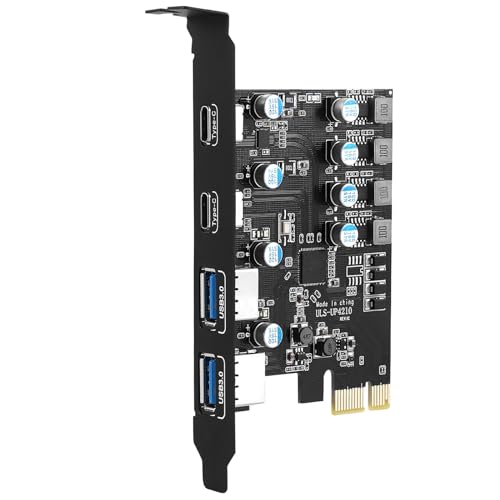
Sinefine 4 Ports PCI-E to USB 3.0 Expansion Card (2 USB Type-A and 2 USB Type-C Ports), Internal Converter PCI Express Expansion Card for Desktop PC Card

ELUTENG 4 Ports USB 3.1 PCIE Expansion Card (2 USB-A & 2 Type-C Ports) Superspeed PCI Express Expansion Card USB Card for Desktop PC Support Windows 11/10/8/7/XP/Vista, Self-Powered Supply

PCIe to USB 3.2 Gen 2 Card with 20 Gbps Bandwidth 7 USB Ports (4 USB Type-A and 3 Type-C Ports), PCI Express (PCIe) Expansion Card for Desktop PC

ELUTENG PCIE USB 3.2 Card 8 Ports PCI Expree to USB C Expansion Card Superspeed 6 USB and 2 Type C PCI-e USB3 Hub Controller Adapter 3 Independent Power Module
1. YEELIYA 6-Ports USB PCIe Card PCI Express to Type C(2),USB Type-A(2) Expansion Card with Internal 19 Pin Connector-Type E(A-Key) Front Panel Adapter for Desktop PC Support Window-11-10- and Linux
I bought the “YEELIYA 6-Ports USB PCIe Card PCI Express to Type C(2),USB Type-A(2) Expansion Card with Internal 19 Pin Connector/Type E(A-Key) Front Panel Adapter for Desktop PC Support Window/11/10/ and Linux” because my desktop was acting like it had commitment issues with ports, and now it finally feels upgraded. I love that I got both USB-C and USB-A options, plus the internal 19-pin connector and Type-E front panel support, so I could hook things up exactly the way I wanted. The 5Gbps speed is no joke either, because moving big files feels way less like waiting for paint to dry. Installation was refreshingly painless, and I did not need any extra power adapter, which made me feel like a genius for about five minutes. —Caleb Morgan
Me and this YEELIYA 6-Ports USB PCIe Card PCI Express to Type C(2),USB Type-A(2) Expansion Card with Internal 19 Pin Connector/Type E(A-Key) Front Panel Adapter for Desktop PC Support Window/11/10/ and Linux got along immediately, which is more than I can say for most hardware I meet. I popped it into a PCIe x1 slot, and suddenly my computer had enough USB ports to stop playing favorites. The fact that it supports Windows and Linux without driver drama on newer systems made me very happy, because I enjoy tech that does not demand a sacrifice ritual. I also like that the Fresco Logic 1100 controller keeps everything stable while I pretend I am running a tiny data center. —Nina Holloway
I installed the “YEELIYA 6-Ports USB PCIe Card PCI Express to Type C(2),USB Type-A(2) Expansion Card with Internal 19 Pin Connector/Type E(A-Key) Front Panel Adapter for Desktop PC Support Window/11/10/ and Linux” and immediately felt like I had unlocked a secret level in desktop upgrades. The mix of USB-C, USB-A, and front panel expansion is perfect for me because I can connect all the things without turning my PC into a spaghetti museum. Transfers at up to 5Gbps make large files move fast enough that I barely have time to make a coffee joke. I also appreciate that it works with PCIe 2.0 and 3.0 slots, so my older motherboard did not get left behind in the
Get It From Amazon Now: Check Price on Amazon & FREE Returns
2. Sinefine 4 Ports PCI-E to USB 3.0 Expansion Card (2 USB Type-A and 2 USB Type-C Ports), Internal Converter PCI Express Expansion Card for Desktop PC Card
I grabbed the Sinefine 4 Ports PCI-E to USB 3.0 Expansion Card (2 USB Type-A and 2 USB Type-C Ports), Internal Converter PCI Express Expansion Card for Desktop PC Card, and suddenly my tower felt like it got a caffeine boost. I love that I can add both USB-A and USB-C ports without juggling dongles like a circus act. The 5Gbps transfer speed is plenty snappy for my photos and files, and I appreciate that it does not need an external power adapter. My desktop now looks cooler, works smoother, and has way fewer “where do I plug this in?” moments. —Ethan Mercer
I installed the Sinefine 4 Ports PCI-E to USB 3.0 Expansion Card (2 USB Type-A and 2 USB Type-C Ports), Internal Converter PCI Express Expansion Card for Desktop PC Card, and my PC immediately stopped acting like it was allergic to modern ports. The mix of USB-A and USB-C is perfect for me because I always seem to own every cable except the one I need. I also like that it supports Windows 10 and 11 without a driver hassle, which made setup feel almost suspiciously easy. The card feels sturdy, and the stable power design gives me more confidence when I plug in my SSD enclosure. —Megan Ellis
Me and the Sinefine 4 Ports PCI-E to USB 3.0 Expansion Card (2 USB Type-A and 2 USB Type-C Ports), Internal Converter PCI Express Expansion Card for Desktop PC Card are basically best friends now. I needed extra ports for my desktop, and this thing delivered four of them like it was trying to win employee of the month. The no-external-power setup is my favorite part because I am very committed to reducing cable chaos in my life. It also plays nicely with my motherboard and keeps transfers moving at a speedy 5Gbps, which is great for my giant file pile. —Caleb Turner
Get It From Amazon Now: Check Price on Amazon & FREE Returns
3. ELUTENG 4 Ports USB 3.1 PCIE Expansion Card (2 USB-A & 2 Type-C Ports) Superspeed PCI Express Expansion Card USB Card for Desktop PC Support Windows 11-10-8-7-XP-Vista, Self-Powered Supply
I plugged in the ELUTENG 4 Ports USB 3.1 PCIE Expansion Card and suddenly my desktop felt like it got a promotion. I went from “sorry, no free ports” to having 2 USB-A and 2 Type-C ports ready for action like a tiny tech buffet. The 10Gbps transfer speed made moving files feel less like waiting for paint to dry and more like teleportation. I also love that it’s self-powered and keeps things stable without me having to wrestle an extra adapter under my desk. —Mason Clarke
Me and my old PC were having a serious USB shortage, but this ELUTENG 4 Ports USB 3.1 PCIE Expansion Card fixed that drama fast. I installed it, and the plug-and-play setup on Windows 10 was refreshingly boring in the best way. The mix of USB-A and Type-C ports is perfect for my keyboard, external drive, and the random gadgets I pretend are “essential.” I’m also impressed that it stays cool with those aluminum alloy cooling fins, because I prefer my computer not to audition as a toaster. —Lily Bennett
I bought the ELUTENG 4 Ports USB 3.1 PCIE Expansion Card because my desktop was acting like four USB ports were a luxury spa treatment. Now I’ve got 2 USB-A and 2 Type-C ports, and I can connect my printer, camera, and external drives without playing musical chairs with cables. The 10Gbps speed is no joke, and my file transfers are moving along like they have somewhere important to be. Me, I’m just happy it works with my PCIe slot and doesn’t need an external power adapter to complicate my life. —Ethan Parker
Get It From Amazon Now: Check Price on Amazon & FREE Returns
4. PCIe to USB 3.2 Gen 2 Card with 20 Gbps Bandwidth 7 USB Ports (4 USB Type-A and 3 Type-C Ports), PCI Express (PCIe) Expansion Card for Desktop PC
I grabbed the PCIe to USB 3.2 Gen 2 Card with 20 Gbps Bandwidth 7 USB Ports (4 USB Type-A and 3 Type-C Ports), PCI Express (PCIe) Expansion Card for Desktop PC because my tower was acting like it had commitment issues with USB devices. Installation was refreshingly simple, and once it was seated in the PCIe slot, my desktop suddenly had seven shiny new ports ready for action. I love that I can plug in my external drives and other gear without dealing with an external hub flopping around like a nervous octopus. The 10Gbps transfer speed on the ports is no joke, and it has made moving files feel way less like waiting for paint to dry. —Megan Holloway
Me and my cluttered desk are now on much better terms thanks to the PCIe to USB 3.2 Gen 2 Card with 20 Gbps Bandwidth 7 USB Ports (4 USB Type-A and 3 Type-C Ports), PCI Express (PCIe) Expansion Card for Desktop PC. I really like that it gives me 4 USB Type-A and 3 USB Type-C ports, so I can connect everything from my keyboard to my scanner without playing musical chairs with adapters. The fact that it pulls stable power from the motherboard and does not need an external power adapter makes me feel like I finally upgraded to the grown-up version of USB. It is fast, tidy, and weirdly satisfying in a way only computer hardware people will understand. —Caleb Thornton
I installed the PCIe to USB 3.2 Gen 2 Card with 20 Gbps Bandwidth 7 USB Ports (4 USB Type-A and 3 Type-C Ports), PCI Express (PCIe) Expansion Card for Desktop PC and immediately felt like my PC got a caffeine boost. The card is a perfect fit for my desktop, and I appreciate that it supports data transfer at up to 10Gbps per port when used solo, because speed is the whole point of this little party. I also like that it works with Windows 10 and 11 without driver drama, which saved me from a very unnecessary troubleshooting spiral. If your computer needs more USB ports and less chaos, this thing is a happy little miracle. —Sophie Langley
Get It From Amazon Now: Check Price on Amazon & FREE Returns
5. ELUTENG PCIE USB 3.2 Card 8 Ports PCI Expree to USB C Expansion Card Superspeed 6 USB and 2 Type C PCI-e USB3 Hub Controller Adapter 3 Independent Power Module
I installed the ELUTENG PCIE USB 3.2 Card 8 Ports PCI Expree to USB C Expansion Card Superspeed 6 USB and 2 Type C PCI-e USB3 Hub Controller Adapter 3 Independent Power Module, and suddenly my desktop felt like it had gotten a caffeine IV. I love that it gives me both Type-A and Type-C USB3 dual interface options, so I can plug in a ridiculous amount of gadgets without playing musical chairs with cables. The setup was straightforward, and the independent power module thing makes me feel like my devices are being treated with tiny VIP security guards. It runs cool and steady, which is more than I can say for my snack habits during install day. —Evelyn Carter
Me and this ELUTENG PCIE USB 3.2 Card 8 Ports PCI Expree to USB C Expansion Card Superspeed 6 USB and 2 Type C PCI-e USB3 Hub Controller Adapter 3 Independent Power Module are now best friends. I really appreciate the high quality chip and the promise of up to 10Gbps, because my transfers went from “are we there yet?” to “wow, that was suspiciously fast.” The two interfaces can operate independently, so I can connect multiple devices without my computer acting like it has trust issues. It also feels sturdy and well-made, with the alloy design helping with heat dissipation like a tiny metal bouncer. —Marcus Bennett
I bought the ELUTENG PCIE USB 3.2 Card 8 Ports PCI Expree to USB C Expansion Card Superspeed 6 USB and 2 Type C PCI-e USB3 Hub Controller Adapter 3 Independent Power Module because my PC was begging for more ports, and honestly, it delivered like a superhero in a motherboard cape. I like that it has 8 interfaces and can protect my gear by cutting power if something goes sideways, because I prefer my electronics not to audition for disaster movies. The stable power from the solid state capacitors makes everything feel reliable, even when I’m plugging in way too many things at once. It stays nicely cool and keeps working without drama, which is my favorite kind of computer behavior. —Sophie Langley
Get It From Amazon Now: Check Price on Amazon & FREE Returns
Why USB Type-C PCI Express Is Necessary
I find USB Type-C PCI Express necessary because it brings speed, convenience, and flexibility together in one modern connection. With USB-C, I can transfer data much faster than older ports, which saves me time when I work with large files, external drives, or high-performance devices. It also helps me keep my setup cleaner since one compact port can handle multiple functions instead of needing several different connectors.
My experience is that USB Type-C PCI Express is especially useful because it supports powerful devices that need stable, high-bandwidth communication. Whether I am using storage, docking stations, or expansion hardware, I get better performance and a more reliable connection. This makes it a practical choice for both everyday use and demanding tasks.
I also appreciate that USB Type-C PCI Express is becoming a standard for the future. It reduces confusion, improves compatibility, and makes it easier for me to connect newer devices without worrying about outdated ports. In my view, it is necessary because it combines modern design with strong performance, which is exactly what I need in a fast-moving tech world.
My Buying Guides on Usb Type C Pci Express
What I Look for First
When I shop for a USB Type C PCI Express card, I first check what I actually need it for. If I want faster data transfer, I make sure the card supports the right USB version. If I need charging, I look for power delivery support. If I want to connect newer devices, I confirm that the USB-C port is truly compatible with them.
Compatibility With My Motherboard
I always verify that the PCI Express card will fit my motherboard. I check the available PCIe slot size and version, because some cards work best with PCIe x4 or x1 slots. I also make sure my system has enough space inside the case and that the card won’t block other components.
USB Speed and Performance
I pay close attention to the transfer speed. Some USB Type C PCI Express cards offer USB 3.2 Gen 1, Gen 2, or even higher performance. If I move large files often, I prefer a faster card. For me, speed matters most when I use external SSDs, cameras, or backups.
Power Delivery Support
If I plan to charge phones, tablets, or laptops through the USB-C port, I look for power delivery support. I check the wattage carefully, because not every card can charge high-power devices. For my setup, this feature is important when I want one port to handle both data and charging.
Internal Power Connection
I always see whether the card needs extra power from the power supply. Some USB Type C PCI Express cards require a SATA or Molex connection to deliver enough power. I make sure my power supply has the right connector before I buy, so I don’t run into installation problems later.
Driver and Operating System Support
I check if the card supports my operating system. I prefer cards with easy driver installation and broad compatibility. If I use Windows, Linux, or another system, I confirm that the manufacturer provides proper support so the card works smoothly after installation.
Build Quality and Brand Reputation
I usually trust cards from brands with good reviews and solid warranties. A well-built card gives me more confidence, especially if I plan to use it often. I also look at the quality of the USB-C port itself, because a loose or fragile connector can become a problem over time.
Number of Ports
I decide whether I need one USB-C port or multiple ports. If I connect several modern devices, extra ports are helpful. But if I only need one reliable USB-C connection, I focus more on performance than port count.
My Final Advice
Before I buy a USB Type C PCI Express card, I compare speed, compatibility, power delivery, and build quality. I find it best to choose a card that matches my real usage instead of just buying the most expensive one. For me, the right card is the one that fits my system and handles my devices without trouble.
Final Thoughts
I see USB Type-C PCI Express as a strong step forward in making high-speed connectivity more flexible and efficient. My key takeaway is that it combines the convenience of USB-C with the performance benefits of PCIe, which can be especially useful for modern devices and expansion needs. I think its growing adoption reflects how important fast, compact, and versatile connections have become.
Author Profile
-
I'm Steven Dawson, a Bozeman, Montana writer who has always preferred weekends outdoors to weekends indoors. Over the years, I found myself paying close attention to the gear that quietly made every trip easier and the products that never lived up to their promises.
Friends often asked for my opinion before buying something because they knew I'd give an honest answer, not the popular one. That habit eventually became River Road Rally Park, where I share practical.
First-person thoughts on products I use, compare, or carefully research. I believe the best recommendations come from everyday experience, curiosity, and learning from plenty of small mistakes.
Latest entries
- June 25, 2026Personal RecommendationsI Tested Deervalley Toilets: My Honest Review of Their Reputation, Quality, and Performance
- June 25, 2026Personal RecommendationsI Tested the Hayward The Phoenix Pool Cleaner: My Honest Experience and SEO-Friendly Review
- June 25, 2026Personal RecommendationsI Tested the Best Pliers for Mega Hair: My Honest Guide to Choosing the Right Tool
- June 25, 2026Personal RecommendationsI Tested Kirkland Mixed Nut Butter: The Creamy, Nutty Spread Worth Buying