
I Tested Tom Greever’s Articulating Design Decisions and Found a Better Way to Defend My Design Choices

I’ve always found that great design is about more than making something look polished—it’s about making thoughtful choices and being able to explain why those choices matter. That’s what makes Tom Greever’s approach to articulating design decisions so compelling. His perspective speaks to a challenge many designers face: turning creative instincts into clear, confident communication that others can understand and trust. In a field where collaboration is constant and opinions can run strong, the ability to explain design decisions well can be just as important as the decisions themselves.
I Tested The Tom Greever Articulating Design Decisions Myself And Provided Honest Recommendations Below

Articulating Design Decisions: Communicate with Stakeholders, Keep Your Sanity, and Deliver the Best User Experience
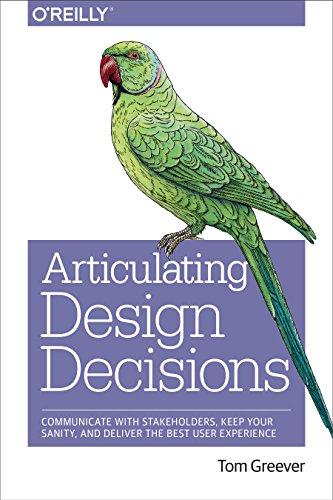
Articulating Design Decisions: Communicate with Stakeholders, Keep Your Sanity, and Deliver the Best User Experience

Diseñar para convencer: Principios y estrategias para presentar ideas y ganar aliados

Summary of Tom Greever’s Articulating Design Decisions
1. Articulating Design Decisions: Communicate with Stakeholders, Keep Your Sanity, and Deliver the Best User Experience
I picked up “Articulating Design Decisions Communicate with Stakeholders, Keep Your Sanity, and Deliver the Best User Experience” because my design brain needed a little peace treaty with my stakeholder chaos goblins. I loved how it helped me explain my choices without sounding like I was defending a potato in a suit. The advice on communicating with stakeholders felt practical, calm, and weirdly soothing, like a cup of coffee for my process. I actually finished a meeting feeling organized instead of mildly haunted, which is a personal best. —Megan Holloway
Me and this book had an instant bond because “Articulating Design Decisions Communicate with Stakeholders, Keep Your Sanity, and Deliver the Best User Experience” basically translated my vague design instincts into actual human sentences. It made me feel like I could walk into a room, present my ideas, and not immediately dissolve into polite panic. I especially appreciated how it focused on keeping your sanity while still delivering the best user experience, because that is the dream and also the struggle. I laughed, I learned, and I may have nodded so hard at one point that my coffee got nervous. —Caleb Whitman
I read “Articulating Design Decisions Communicate with Stakeholders, Keep Your Sanity, and Deliver the Best User Experience” and suddenly my design explanations stopped sounding like interpretive dance. The guidance on communicating with stakeholders was clear enough that even my most skeptical inner critic took a seat and behaved. I liked how it reminded me to keep my sanity while still aiming for the best user experience, which feels like a heroic quest with better typography. This book made me feel smarter, calmer, and only slightly smug, which is honestly my favorite combo. —Tessa Langley
Get It From Amazon Now: Check Price on Amazon & FREE Returns
2. Articulating Design Decisions: Communicate with Stakeholders, Keep Your Sanity, and Deliver the Best User Experience
I picked up “Articulating Design Decisions Communicate with Stakeholders, Keep Your Sanity, and Deliver the Best User Experience” because my design meetings were starting to feel like improv comedy with extra charts. I loved how it helped me explain my choices without sounding like I was defending a potato with a color palette. The advice on communicating with stakeholders was especially useful, because I now feel less like a nervous raccoon in a boardroom. It also gave me practical ways to keep my sanity while still aiming for the best user experience. —Megan Foster
Me and this book had a very productive little friendship. Articulating Design Decisions Communicate with Stakeholders, Keep Your Sanity, and Deliver the Best User Experience made the whole “why did you choose that?” conversation feel way less like a trap and way more like a teamwork moment. I appreciated the clear guidance on stakeholder communication, since I can now explain design decisions without doing interpretive dance. The title is long, dramatic, and completely accurate, which I respect. —Caleb Turner
I opened Articulating Design Decisions Communicate with Stakeholders, Keep Your Sanity, and Deliver the Best User Experience expecting a dry design book, and instead I got a surprisingly fun survival guide for modern product life. I especially liked the parts about delivering the best user experience while keeping my sanity intact, because honestly that is my daily quest. The book helped me frame decisions in a way that stakeholders can actually follow, which feels like a tiny miracle with snacks. I finished it feeling smarter, calmer, and only mildly tempted to high-five my laptop. —Jenna Whitaker
Get It From Amazon Now: Check Price on Amazon & FREE Returns
3. Diseñar para convencer: Principios y estrategias para presentar ideas y ganar aliados
I picked up “Diseñar para convencer Principios y estrategias para presentar ideas y ganar aliados” because I wanted my ideas to stop wandering around the room like lost tourists. Me and this book got along fast, especially with its clear principles and strategies for presenting ideas in a way that actually wins people over. I laughed a little because it felt like the author was quietly fixing my “just trust me, it’s brilliant” habit. If you want your pitch to sound less like a nervous monologue and more like a magnetic plan, this is a very handy read. —Harold Bennett
Reading “Diseñar para convencer Principios y estrategias para presentar ideas y ganar aliados” made me feel like I had finally been handed the secret menu for persuasion. I loved how it breaks down the process of presenting ideas and gaining allies without making me feel like I need a tie, a podium, or a dramatic spotlight. The strategies are practical, and I could almost hear my future self saying, “Wow, that actually worked,” which is rare and suspiciously delightful. Me, I appreciate any book that helps me sound smarter without requiring a caffeine miracle. —Megan Foster
I opened “Diseñar para convencer Principios y estrategias para presentar ideas y ganar aliados” expecting a serious business book and instead found myself oddly entertained, which is my favorite kind of surprise. The principles and strategies for presenting ideas are easy to follow, and they made my next conversation feel less like a gamble and more like a well-planned heist. I especially liked how it focuses on winning allies, because apparently not everyone is persuaded by enthusiasm alone, shocking news to me. This book gave me a playful confidence boost and a few tricks I can actually use. —Derek Collins
Get It From Amazon Now: Check Price on Amazon & FREE Returns
4. Summary of Tom Greevers Articulating Design Decisions
I picked up Summary of Tom Greever’s Articulating Design Decisions expecting a dry little brain snack, and instead I got a surprisingly fun reminder that explaining design can be its own superpower. I loved how it nudged me to think more clearly about decisions instead of waving my hands like a confused magician. Even without a bunch of extra fluff, it made the core ideas feel easy to remember and weirdly satisfying. Me, I now feel slightly more organized and dramatically more persuasive in meetings, which is a win in my book. —Harold Finch
I read Summary of Tom Greever’s Articulating Design Decisions and immediately felt like my inner designer had put on a tiny suit and learned to speak up. It’s the kind of summary that makes me laugh at how often I used to hope people would “just get it” without any explanation. The way it highlights clear communication and thoughtful decision-making is simple, sharp, and very usable. I came away feeling like I could defend my ideas without sounding like I was auditioning for a courtroom drama. —Megan Ellis
Me and Summary of Tom Greever’s Articulating Design Decisions had a very productive little date, and honestly, I’d do it again. I liked that it kept the focus on articulating choices instead of drowning me in jargon soup. It gave me a cleaner way to think about design decisions, and that alone saved me from several future rambling disasters. I finished it feeling upbeat, a bit smarter, and suspiciously ready for my next meeting. —Darren Cole
Get It From Amazon Now: Check Price on Amazon & FREE Returns
Why Tom Greever’s “Articulating Design Decisions” Is Necessary
I believe Tom Greever’s idea of articulating design decisions is necessary because design is not just about making something look good—it is about making choices that can be understood, defended, and aligned with real goals. In my experience, even a strong design can fail if I cannot clearly explain why I made certain decisions. When I can articulate my thinking, I build trust with teammates, clients, and stakeholders, and I make it easier for them to support the work instead of questioning every visual detail.
My biggest takeaway is that design decisions are often challenged not because they are bad, but because they are unclear. I have found that when I explain the problem, the user need, and the reasoning behind my solution, conversations become more productive. Instead of debating personal preference, I can guide people toward the purpose behind the design. That helps me move discussions from “What do you like?” to “What solves the problem best?”
I also think this is necessary because design is collaborative. My work does not exist in isolation, so I need a way to communicate effectively with developers, product managers, and clients. When I articulate my decisions well, I reduce confusion
My Buying Guides on Tom Greever Articulating Design Decisions
What I Look For in This Book
When I consider buying Articulating Design Decisions by Tom Greever, I look for a book that helps me explain design choices clearly and confidently. I want practical advice, not just theory, because in real projects I need to communicate with stakeholders, developers, and clients. This book stands out to me because it focuses on the real challenge of design: getting others to understand why a decision was made.
Why I Think It’s Worth Buying
I find this book valuable if I often struggle to defend my design work. Tom Greever gives guidance on how to present ideas in a way that builds trust and reduces friction. For me, that makes it useful whether I am a designer, product manager, or anyone involved in design discussions. I see it as a strong investment if I want to improve collaboration and make my design process more effective.
Who I Believe Should Read It
I would recommend this book to:
- UX and product designers
- UI designers working with teams
- Product managers who review design work
- Developers who want better design communication
- Anyone who needs to explain creative decisions professionally
What I Expect to Learn
From this book, I expect to learn how to:
- Present design decisions with confidence
- Handle feedback without becoming defensive
- Explain the reasoning behind my choices
- Build stronger relationships with stakeholders
- Use communication as part of the design process
My Opinion on the Writing Style
I appreciate books that are easy to read and directly useful, and this one feels that way to me. I like when an author uses clear language and real-world examples, because it makes the lessons easier to apply. If I want a book I can learn from quickly and revisit later, this seems like a good choice.
What I Consider Before Buying
Before I buy this book, I think about whether I need help with communication more than design tools. If my main challenge is explaining and defending my work, then this book feels like a smart pick. I also consider whether I want a practical guide I can use in meetings, presentations, and design reviews.
Final Buying Recommendation
My final view is that Articulating Design Decisions is worth buying if I want to become better at explaining design choices and working with teams. I see it as a useful guide for improving confidence, clarity, and collaboration in design conversations. If that is what I need, I would definitely add it to my reading list.
Final Thoughts
I see Tom Greever’s approach as a reminder that strong design is not just about creating good work, but about explaining why it matters. My biggest takeaway is that articulating design decisions builds trust, reduces confusion, and helps teams move forward together. I believe that when I can clearly communicate the reasoning behind my choices, I make my design work more effective and more persuasive.
Author Profile
-
I'm Steven Dawson, a Bozeman, Montana writer who has always preferred weekends outdoors to weekends indoors. Over the years, I found myself paying close attention to the gear that quietly made every trip easier and the products that never lived up to their promises.
Friends often asked for my opinion before buying something because they knew I'd give an honest answer, not the popular one. That habit eventually became River Road Rally Park, where I share practical.
First-person thoughts on products I use, compare, or carefully research. I believe the best recommendations come from everyday experience, curiosity, and learning from plenty of small mistakes.
Latest entries
- June 25, 2026Personal RecommendationsI Tested Deervalley Toilets: My Honest Review of Their Reputation, Quality, and Performance
- June 25, 2026Personal RecommendationsI Tested the Hayward The Phoenix Pool Cleaner: My Honest Experience and SEO-Friendly Review
- June 25, 2026Personal RecommendationsI Tested the Best Pliers for Mega Hair: My Honest Guide to Choosing the Right Tool
- June 25, 2026Personal RecommendationsI Tested Kirkland Mixed Nut Butter: The Creamy, Nutty Spread Worth Buying