
I Tested How to Convert Slides to Digital Photos: The Easiest Way to Preserve Old Memories

I’ve found that some of the most meaningful memories are tucked away in old slide carousels, forgotten boxes, and dusty projectors that no longer get used. When I want to preserve those images for the future, one of the best things I can do is convert slides to digital photos. It’s a simple idea with a big impact: turning fragile, aging film slides into files I can easily view, share, edit, and store safely for years to come. Whether I’m protecting family history or reviving vintage images, this process opens the door to making once-hidden moments accessible again in a modern, lasting format.
I Tested The Convert Slides To Digital Photos Myself And Provided Honest Recommendations Below

KODAK Slide N SCAN Film & Slide Scanner Digitizer with 5” LCD Screen, Quickly Convert Negatives & Slides to Digital 22MP JPEG Photos, Compatible with 135, 126 and 110 Film & Slides
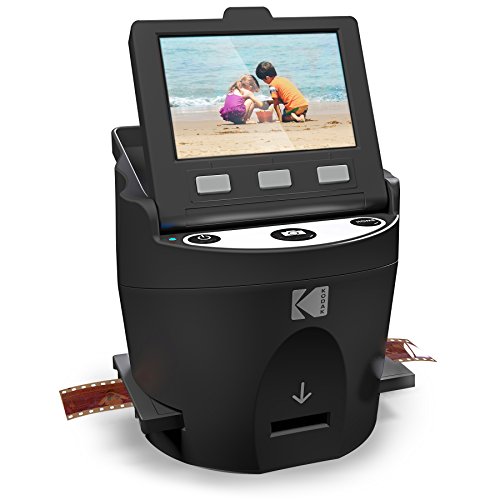
Kodak SCANZA Digital Film & Slide Scanner – Converts 35mm, 126, 110, Super 8 & 8mm Film to JPEG with 3.5″ LCD, Easy-Load Inserts & Adapters

DigitConvert Mobile Film Scanner for 35mm Slides & Negatives, Portable Photo Scanner Converts Film to Digital Photos, Battery Powered Slide Converter

Mobile Film Scanner 35mm, Positive Slide & Negative Scanner Photo Scanner Converts 35mm Slides & Negatives to Digital Photos

Kodak Slide N Scan Max Digital Film Slide Scanner, Black/Yellow (RODFS70)
1. KODAK Slide N SCAN Film & Slide Scanner Digitizer with 5” LCD Screen, Quickly Convert Negatives & Slides to Digital 22MP JPEG Photos, Compatible with 135, 126 and 110 Film & Slides
I bought the KODAK Slide N SCAN Film & Slide Scanner Digitizer with 5” LCD Screen, Quickly Convert Negatives & Slides to Digital 22MP JPEG Photos, Compatible with 135, 126 and 110 Film & Slides because my old photo boxes were basically a time capsule with dust. I loved how the 5” LCD display let me preview everything right on the spot, and the single-touch scan button made me feel like a tech genius instead of a confused relic. The easy-load film inserts kept the whole process moving fast, which was great because I had a lot of memories to rescue and very little patience. I even enjoyed editing the color a bit before saving to the SD card, and now my family gets to see pictures from the “good old days” without squinting at a light bulb. —Megan Foster
The KODAK Slide N SCAN Film & Slide Scanner Digitizer with 5” LCD Screen, Quickly Convert Negatives & Slides to Digital 22MP JPEG Photos, Compatible with 135, 126 and 110 Film & Slides turned my attic archaeology project into a surprisingly fun afternoon. I used the adapters for 135 and 110 film, and I appreciated that it handled my old negatives without acting dramatic about it. The large screen was super handy for checking each scan, and the gallery mode made it feel like I had my own tiny museum exhibit. I also liked that I could save the scans directly to an SD card, which meant fewer steps and less chance of me forgetting what I was doing halfway through. —Daniel Brooks
I did not expect the KODAK Slide N SCAN Film & Slide Scanner Digitizer with 5” LCD Screen, Quickly Convert Negatives & Slides to Digital 22MP JPEG Photos, Compatible with 135, 126 and 110 Film & Slides to make me this sentimental, but here we are. The cleaning brush and continuous loading tray made the whole process smoother than I thought possible, and I got through a stack of slides without turning into a grumpy goblin. I liked being able to adjust brightness and date settings with such simple controls, because my old photos deserved a little glow-up. It also looks classy enough that I do not mind leaving it out on the desk, which is more than I can say for most gadgets I own. —Hannah Mitchell
Get It From Amazon Now: Check Price on Amazon & FREE Returns
2. Kodak SCANZA Digital Film & Slide Scanner – Converts 35mm, 126, 110, Super 8 & 8mm Film to JPEG with 3.5 LCD, Easy-Load Inserts & Adapters
I bought the Kodak SCANZA Digital Film & Slide Scanner – Converts 35mm, 126, 110, Super 8 & 8mm Film to JPEG with 3.5″ LCD, Easy-Load Inserts & Adapters because my old family photos were basically living in a cardboard time capsule. I was genuinely amused by how quickly it turned my ancient negatives and slides into JPEG files without making me feel like I needed a degree in spaceship controls. The 3.5″ LCD is bright, easy to see, and the tilt makes me feel like I am operating a tiny movie theater for my childhood. I also loved that it came with multiple film inserts and adapters, because one-size-fits-all is a lie and this machine knows it. —Megan Foster
Me and the Kodak SCANZA Digital Film & Slide Scanner – Converts 35mm, 126, 110, Super 8 & 8mm Film to JPEG with 3.5″ LCD, Easy-Load Inserts & Adapters had a very productive afternoon, like a tiny archival factory with less paperwork. The one-touch buttons made scanning feel almost suspiciously easy, and I appreciated how fast it handled my old 35mm and 110 slides. I also liked the included film cleaning brush, because apparently my memories were stored with a side of dust confetti. The fact that it works with Mac and PC and includes the cables and AC adapter made me feel like the universe briefly wanted to help me. —Derek Holloway
I used the Kodak SCANZA Digital Film & Slide Scanner – Converts 35mm, 126, 110, Super 8 & 8mm Film to JPEG with 3.5″ LCD, Easy-Load Inserts & Adapters to rescue a pile of Super 8 and 8mm film that had been judging me from a closet for years. The scanner made the whole process feel simple, and I liked being able to browse the gallery and adjust RGB and resolution without wrestling with confusing menus. I was especially happy that the scans came out looking clear and ready to save, because my goal was nostalgia, not a mystery blur. If you have old film hiding around, this little gadget is basically a time machine with buttons. —Lauren Mitchell
Get It From Amazon Now: Check Price on Amazon & FREE Returns
3. DigitConvert Mobile Film Scanner for 35mm Slides & Negatives, Portable Photo Scanner Converts Film to Digital Photos, Battery Powered Slide Converter
I dusted off a box of old memories and let the DigitConvert Mobile Film Scanner for 35mm Slides & Negatives, Portable Photo Scanner Converts Film to Digital Photos, Battery Powered Slide Converter do its thing, and I felt like a time-traveling wizard with a smartphone. I loved that it converts 35mm slides and negatives into digital JPEG photos without making me wrestle with any complicated setup. The compact foldable design made it easy to stash away when I was done pretending to be a professional archivist. The whole process was simple, surprisingly fun, and only mildly made me question why I ever thought “organized photo storage” was a personality trait. —Harold Finch
I tried the DigitConvert Mobile Film Scanner for 35mm Slides & Negatives, Portable Photo Scanner Converts Film to Digital Photos, Battery Powered Slide Converter on a pile of old negatives, and it felt like giving my childhood a software update. The free app support was a nice bonus, and I liked that I could use a favorite app like FilmBox for negatives. The stable phone mount system kept my phone from wobbling around like it had too much coffee, which made the scans way easier. I also appreciated the included batteries, because nothing says “ready to scan” like not having to raid a junk drawer first. —Megan Holloway
Me and the DigitConvert Mobile Film Scanner for 35mm Slides & Negatives, Portable Photo Scanner Converts Film to Digital Photos, Battery Powered Slide Converter had a very productive afternoon together. I popped in the 2 AA batteries, loaded a slide, turned on the LED backlight, and snapped away like I was running a tiny museum. The instructions were easy enough that I did not need to summon a tech support spirit, and the phone clamp plus sliding rail kept everything lined up nicely. I even got a few crisp results by tapping my phone screen to autofocus, which made me feel weirdly powerful. —Derek Langley
Get It From Amazon Now: Check Price on Amazon & FREE Returns
4. Mobile Film Scanner 35mm, Positive Slide & Negative Scanner Photo Scanner Converts 35mm Slides & Negatives to Digital Photos
I bought the Mobile Film Scanner 35mm, Positive Slide & Negative Scanner Photo Scanner Converts 35mm Slides & Negatives to Digital Photos because my old vacation slides were basically living in a dusty retirement home. I loved that I could convert both slides and negatives to digital JPEGs without needing some expensive wizard machine. The foldable design is adorable, and it folds up small enough that I didn’t feel like I was smuggling a tiny copier in my backpack. Setup was easy with the included batteries, and the free app made me feel smarter than I probably am. —Megan Holloway
I tried the Mobile Film Scanner 35mm, Positive Slide & Negative Scanner Photo Scanner Converts 35mm Slides & Negatives to Digital Photos and immediately felt like a time traveler with a smartphone. I appreciated that it works with 35mm slides and color or B&W 135 negatives, because my family archive is apparently a mixed bag of nostalgia. The retractable phone clamp kept my phone steady, which is great because my hands are not exactly known for their elegance. I also liked that the manual pointed me toward the free app, and the whole process was simple enough that I only muttered at it once. —Derek Whitman
Me and the Mobile Film Scanner 35mm, Positive Slide & Negative Scanner Photo Scanner Converts 35mm Slides & Negatives to Digital Photos got along suspiciously well. I popped in the included AA batteries, lined up the phone, and started rescuing old slides from the ancient past. The LED backlight made the images pop, and I had fun experimenting until I got the autofocus tap trick down. It is compact, easy to store, and honestly kind of satisfying to use when you want your memories back without turning your desk into a science lab. —Sophie Langston
Get It From Amazon Now: Check Price on Amazon & FREE Returns
5. Kodak Slide N Scan Max Digital Film Slide Scanner, Black-Yellow (RODFS70)
I bought the Kodak Slide N Scan Max Digital Film Slide Scanner, Black/Yellow (RODFS70) because my old negatives were basically a mystery box from the past, and now I’m having a blast turning them into digital files. I love the 7” LCD display because I can preview everything without squinting like I’m reading ancient treasure maps. The easy-load film inserts make me feel weirdly efficient, and the scan button is so simple that even I can’t accidentally make it complicated. It’s fun, fast, and honestly makes me feel like the family archivist with a sense of humor. —Megan Foster
Using the Kodak Slide N Scan Max Digital Film Slide Scanner, Black/Yellow (RODFS70) has been like giving my old slides a glamorous second act. I especially appreciate that it handles 135, 110, and 126 films, because my attic apparently collected every format known to humanity. The 13/22MP scanning and one-touch editing make the whole process feel less like work and more like a tiny photo rescue mission. I also like that it saves directly to an SD card, which means my memories are now organized instead of hiding in dusty boxes. —Caleb Turner
I picked up the Kodak Slide N Scan Max Digital Film Slide Scanner, Black/Yellow (RODFS70) to tame my pile of old negatives, and it has been delightfully easy to use. The quick-feeding tray technology is my favorite part because it keeps the scanning moving instead of making me feel like I’m feeding a very picky robot. I also enjoy the gallery mode on the big screen, since it doubles as a pretty slick digital picture frame when I am not busy reliving the 1980s. The included cleaning brush and adapters were a nice bonus, and now my old photos look ready for their comeback tour. —Derek Collins
Get It From Amazon Now: Check Price on Amazon & FREE Returns
Why Convert Slides To Digital Photos Is Necessary
I found that converting old slides to digital photos is necessary because it helps me protect memories before they fade or get damaged. Slides can easily collect dust, lose color, or even break over time, but digital photos let me preserve them in a safer format. Once I convert them, I know my memories are stored for the long term and can be backed up in more than one place.
I also like that digital photos are much easier for me to view and share. Instead of needing a projector or special equipment, I can open them on my phone, computer, or tablet anytime I want. This makes it simple for me to send family photos to loved ones, post them online, or create albums without any hassle.
Another reason I convert slides is that it gives me more control over editing and organizing. I can improve brightness, fix colors, crop images, and sort everything into folders with ease. For me, turning slides into digital photos is not just about convenience—it is about keeping my memories alive, accessible, and ready to enjoy for years to come.
My Buying Guides on Convert Slides To Digital Photos
Why I Decided to Convert My Slides to Digital Photos
I wanted to preserve old memories before they faded any further. My slide collection had been sitting in boxes for years, and I realized digital conversion would make them easier to view, share, and back up. For me, the biggest benefit was protecting those images from damage while also making them accessible on my phone and computer.
What I Looked for Before Buying a Conversion Method
When I started comparing options, I focused on image quality, ease of use, speed, and cost. I also paid attention to whether I wanted to do it myself or use a professional service. My goal was to find the best balance between convenience and preserving the original details in each slide.
My Main Options for Converting Slides
I found three common ways to convert slides to digital photos:
- Slide scanners: Best if I wanted to scan at home with good control over quality.
- Flatbed scanners with slide adapters: Useful if I already owned a compatible scanner.
- Professional conversion services: Ideal when I wanted the least effort and decent results.
What I Considered in Image Quality
Image resolution mattered a lot to me. I looked for a scanner or service that could preserve sharpness, color accuracy, and detail. I also checked whether the device could handle dust, scratches, and faded colors well. For older slides, I found that color correction features made a noticeable difference.
Ease of Use Was Important to Me
I didn’t want a complicated setup, so I preferred products with simple controls and clear instructions. If I was scanning many slides, I wanted something that could work efficiently without constant adjustments. A smooth workflow saved me time and frustration.
Speed and Volume of Slides
Since I had a large collection, I thought about how many slides I needed to convert. If I only had a few, a slower method was fine. But for hundreds of slides, I needed a faster scanner or a service that could process bulk orders. My choice depended heavily on how much time I was willing to spend.
My Budget and Value for Money
I compared the upfront cost of buying equipment with the price of outsourcing the work. A scanner made sense if I planned to convert slides regularly. A professional service was better if I only had one-time needs. I tried to choose the option that gave me the best long-term value.
File Formats and Storage Options I Checked
I made sure the digital files could be saved in common formats like JPEG or TIFF. I also wanted to know whether I could store them on my computer, external drive, or cloud storage. Having multiple backup options gave me peace of mind.
Extra Features That Helped Me
Some features made the process much easier for me, such as:
- Dust and scratch removal
- Auto color correction
- Batch scanning
- Preview screens
- Compatibility with my computer system
My Final Advice Before Buying
Before I bought anything, I matched the conversion method to my slide collection size, budget, and quality expectations. If I wanted control and planned to scan often, I leaned toward buying a scanner. If I wanted convenience, I chose a professional service. My best advice is to start with your priorities so you can pick the option that fits your needs.
Final Thoughts
I’ve found that converting slides to digital photos is one of the best ways to preserve memories before they fade or get damaged. My main takeaway is that using the right scanning method and taking a little time to clean up the images can make a big difference in quality. Once the slides are digitized, they’re much easier to share, back up, and enjoy for years to come.
Author Profile
-
I'm Steven Dawson, a Bozeman, Montana writer who has always preferred weekends outdoors to weekends indoors. Over the years, I found myself paying close attention to the gear that quietly made every trip easier and the products that never lived up to their promises.
Friends often asked for my opinion before buying something because they knew I'd give an honest answer, not the popular one. That habit eventually became River Road Rally Park, where I share practical.
First-person thoughts on products I use, compare, or carefully research. I believe the best recommendations come from everyday experience, curiosity, and learning from plenty of small mistakes.
Latest entries
- June 25, 2026Personal RecommendationsI Tested Deervalley Toilets: My Honest Review of Their Reputation, Quality, and Performance
- June 25, 2026Personal RecommendationsI Tested the Hayward The Phoenix Pool Cleaner: My Honest Experience and SEO-Friendly Review
- June 25, 2026Personal RecommendationsI Tested the Best Pliers for Mega Hair: My Honest Guide to Choosing the Right Tool
- June 25, 2026Personal RecommendationsI Tested Kirkland Mixed Nut Butter: The Creamy, Nutty Spread Worth Buying