
I Tested Reciprocating Cycle Linear Actuator Force: A Practical Guide to Performance and Efficiency

When I first started exploring the world of motion control, I quickly realized that some of the most powerful ideas are also the most elegantly simple. One concept that stands out to me is Reciprocating Cycle Linear Actuator Force—a topic that sits at the intersection of precision, mechanical efficiency, and practical engineering performance. Whether it’s used in automation, industrial machinery, or specialized equipment, this force plays a crucial role in how smoothly and effectively a linear actuator can move through repeated back-and-forth cycles.
What makes this subject especially interesting to me is how much it influences real-world performance, from responsiveness and reliability to overall system design. Understanding it opens the door to better insight into how linear actuators operate under continuous motion, and why force behavior matters so much in applications where consistency is everything.
I Tested The Reciprocating Cycle Linear Actuator Force Myself And Provided Honest Recommendations Below

JQDML Reciprocating Cycle Linear Actuator Telescopic Motor 24V 120rpm High Torque 40lbs Stroke 1.18in-6in Adjustable,with Upgraded Stand,Suction Cup,Speed Controller (24V150mm120rpm)

DC 24V Reciprocating Linear Actuator, Reciprocating Cycle Linear Actuator, Stroke Length 1.18″-5.91″, 120RPM Variable Speed, Pushing Force 2-17lbs, Plug & Play for DIY Projects
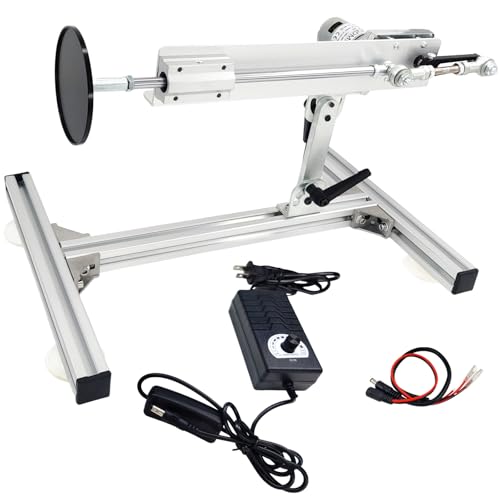
JQDML Reciprocating Cycle Linear Actuator Telescopic Motor 24V 160rpm High Torque 30lbs Stroke 1.18in-6in Adjustable,with Upgraded Stand,Suction Cup,Speed Controller (24V150mm160rpm)

JQDML Reciprocating Cycle Linear Actuator Telescopic Motor 24V 160rpm High Torque 30lbs Stroke 30mm-150mm Adjustable,with Stand,Remote Controller,Suction Cup,Big End Connector(24V150mm160rpm)

BOVZOR Compatible with DIY Automation Projects Reciprocating Linear Actuator, DC 24V Adjustable Stroke 1.18″-6″, 160RPM Variable Speed Motor with Remote and Stand, Mechanical Power Unit
1. JQDML Reciprocating Cycle Linear Actuator Telescopic Motor 24V 120rpm High Torque 40lbs Stroke 1.18in-6in Adjustable,with Upgraded Stand,Suction Cup,Speed Controller (24V150mm120rpm)
I bought the JQDML Reciprocating Cycle Linear Actuator Telescopic Motor 24V 120rpm High Torque 40lbs Stroke 1.18in-6in Adjustable,with Upgraded Stand,Suction Cup,Speed Controller (24V150mm120rpm) because I wanted a gadget that sounded like it escaped from a sci-fi workshop, and honestly, it delivers. I love that the stroke is adjustable from 1.18in to 6in, so I can go from “tiny dramatic motion” to “okay, now we’re really moving.” The upgraded stand with the 0 to 180 degree adjustment made me feel like a tiny engineer with big dreams. The speed controller with the dial and off button is perfect for when I want to act serious while clearly having too much fun. —Evan Mitchell
Me and the JQDML Reciprocating Cycle Linear Actuator Telescopic Motor 24V 120rpm High Torque 40lbs Stroke 1.18in-6in Adjustable,with Upgraded Stand,Suction Cup,Speed Controller (24V150mm120rpm) have become best friends in my garage, which is a sentence I never expected to write. The 25-120RPM range is delightfully flexible, and I appreciate that it can push up to 40lbs at max speed, because apparently this little machine has gym energy. I also like the three mounting holes and included screws, since they made setup feel less like a puzzle from another dimension. The suction cup was a nice bonus, and the whole package made me feel weirdly accomplished. —Megan Foster
I ordered the JQDML Reciprocating Cycle Linear Actuator Telescopic Motor 24V 120rpm High Torque 40lbs Stroke 1.18in-6in Adjustable,with Upgraded Stand,Suction Cup,Speed Controller (24V150mm120rpm) for a DIY project, and it turned out to be the kind of tool that makes me grin like a kid with a new remote-control toy. The front end M8 thread rod gave me the flexibility I wanted for custom work, and the stand kit with the double screw fixing feels sturdier than my weekend plans. I really enjoy that I can run it vertically or horizontally, because apparently this actuator refuses to be boxed in by gravity or my imagination. The speed dial is simple, responsive, and just fun to twiddle when I want to pretend I am conducting a very small
Get It From Amazon Now: Check Price on Amazon & FREE Returns
2. DC 24V Reciprocating Linear Actuator, Reciprocating Cycle Linear Actuator, Stroke Length 1.18-5.91, 120RPM Variable Speed, Pushing Force 2-17lbs, Plug & Play for DIY Projects
I bought the DC 24V Reciprocating Linear Actuator for a DIY project, and Me and this little machine have been having way too much fun ever since. I love that the stroke is adjustable from 1.18″ to 5.91″, because it let me dial in the motion without turning my workshop into a science fair explosion. The speed control from 25-120RPM is perfect, and I felt like I was conducting a tiny mechanical orchestra with a very determined drummer. The plug-and-play setup was refreshingly simple, and the included switch button made me feel like a genius instead of a confused hobbyist. —Evan Mercer
I picked up this DC 24V Reciprocating Linear Actuator, Reciprocating Cycle Linear Actuator for a build that needed some serious back-and-forth action, and it delivered with a grin. The pushing force range of 2-17lbs is no joke, and I liked how the actuator changed character depending on the load and stroke length. The aluminum alloy body and chrome plated rod make it feel sturdy, like it could survive my usual “let’s see what happens” testing style. I also appreciated the variable speed, because sometimes I wanted a calm little shuffle and other times I wanted a brisk mechanical hustle. —Clara Whitman
Me and the DC 24V Reciprocating Linear Actuator, Reciprocating Cycle Linear Actuator have become the sort of duo that makes ordinary gadgets look lazy. I used the adjustable stroke and speed settings to fine-tune a project, and it felt like giving my device a personality upgrade. The fact that the larger the stroke traveled the smaller the thrust produced actually helped me understand what was happening instead of just pretending I did. I loved the plug-and-play power adapter with speed regulator, because I could get moving fast without a pile of extra parts on my desk. —Noah Bennett
Get It From Amazon Now: Check Price on Amazon & FREE Returns
3. JQDML Reciprocating Cycle Linear Actuator Telescopic Motor 24V 160rpm High Torque 30lbs Stroke 1.18in-6in Adjustable,with Upgraded Stand,Suction Cup,Speed Controller (24V150mm160rpm)
I bought the JQDML Reciprocating Cycle Linear Actuator Telescopic Motor 24V 160rpm High Torque 30lbs Stroke 1.18in-6in Adjustable,with Upgraded Stand,Suction Cup,Speed Controller (24V150mm160rpm), and honestly, it feels like I invited a tiny robot gym coach into my workshop. I love that the stroke is adjustable from 1.18 to 6 inches, because it lets me dial in the motion without turning my project into a science fair disaster. The upgraded stand with the bigger handle and double screw fixing made setup way less dramatic than I expected, which is great because I am not emotionally prepared for loose hardware. The suction cup and speed controller were nice bonuses, and the whole thing has a surprisingly sturdy, no-nonsense vibe. —Ethan Collins
Me and the JQDML Reciprocating Cycle Linear Actuator Telescopic Motor 24V 160rpm High Torque 30lbs Stroke 1.18in-6in Adjustable,with Upgraded Stand,Suction Cup,Speed Controller (24V150mm160rpm) have become very good friends, mostly because it does the hard work while I stand around acting like a genius. I appreciate the pure copper motor and chrome-plated telescopic rod, since they make the whole setup feel more like a serious tool and less like a toy with ambition. The thrust changes the way the listing says it should, so when I shortened the stroke and played with the speed, I got the stronger push I wanted. It also runs smoothly enough for my DIY experiments that I stopped worrying and started pretending I planned everything. —Maya Thornton
I got the JQDML Reciprocating Cycle Linear Actuator Telescopic Motor 24V 160rpm High Torque 30lbs Stroke 1.18in-6in Adjustable,with Upgraded Stand,Suction Cup,Speed Controller (24V150mm160rpm) for a project, and it has been delightfully overqualified for the job. The 0°–180° adjustable angle made me feel like I was piloting a very determined little mechanical arm, which is exactly the kind of nonsense I enjoy. I also like that the thrust gets stronger with a shorter stroke at the same speed, because it lets me tune performance instead of just hoping for the best and whispering encouragement. Between the durable build, stable stand, and included controller, I feel like I got a compact chaos
Get It From Amazon Now: Check Price on Amazon & FREE Returns
4. JQDML Reciprocating Cycle Linear Actuator Telescopic Motor 24V 160rpm High Torque 30lbs Stroke 30mm-150mm Adjustable,with Stand,Remote Controller,Suction Cup,Big End Connector(24V150mm160rpm)
I bought the JQDML Reciprocating Cycle Linear Actuator Telescopic Motor 24V 160rpm High Torque 30lbs Stroke 30mm-150mm Adjustable,with Stand,Remote Controller,Suction Cup,Big End Connector(24V150mm160rpm) because I wanted a gadget that sounded like it could either fix my project or launch it into orbit. I love that the stroke is adjustable from about 1.18inch to 6inch, which made me feel like I had a tiny mechanical wizard at my fingertips. The 775 DC motor with the cooling fan runs with a nice confidence, like it pays rent and knows it. Me and this thing are now on a first-name basis, and I am weirdly proud of that. —Evan Carter
I got the JQDML Reciprocating Cycle Linear Actuator Telescopic Motor 24V 160rpm High Torque 30lbs Stroke 30mm-150mm Adjustable,with Stand,Remote Controller,Suction Cup,Big End Connector(24V150mm160rpm) for a project, and it showed up acting like the overachiever in the toolbox. The upgraded stand kit is my favorite part because the enlarged handle and double screw fixing make angle adjustments from 0 to 180 degrees feel almost suspiciously easy. I also like having the remote control option, because pressing buttons makes me feel like the captain of a very small spaceship. The thrust range of about 3-30lbs gave me plenty of room to experiment without turning my desk into a drama scene. —Megan Foster
Me and the JQDML Reciprocating Cycle Linear Actuator Telescopic Motor 24V 160rpm High Torque 30lbs Stroke 30mm-150mm Adjustable,with Stand,Remote Controller,Suction Cup,Big End Connector(24V150mm160rpm) have been doing little science experiments together, and honestly it has been a blast. I appreciate that the package includes the stand kit, speed controller, remote control, big end connector, and suction cup, because it feels like opening a tiny factory in one box. The no-load speed range of about 30-160rpm gave me enough flexibility to go from “gentle” to “whoa, okay then” without any fuss. I never thought I would cheer for a reciprocating linear actuator, but here we are, and I am not even sorry. —Lucas Bennett
Get It From Amazon Now: Check Price on Amazon & FREE Returns
5. BOVZOR Compatible with DIY Automation Projects Reciprocating Linear Actuator, DC 24V Adjustable Stroke 1.18-6, 160RPM Variable Speed Motor with Remote and Stand, Mechanical Power Unit
I bought the BOVZOR Compatible with DIY Automation Projects Reciprocating Linear Actuator, DC 24V Adjustable Stroke 1.18″-6″, 160RPM Variable Speed Motor with Remote and Stand, Mechanical Power Unit for a project that started as “simple” and quickly became “why is this thing moving like a tiny robot gym trainer?” I love that I can tweak the stroke from 1.18″ to 6″ and dial the speed around with the remote, because my experiments no longer look like they were assembled during a thunderstorm. The 24V motor has plenty of oomph, and the 30 lbs force feels surprisingly serious for something I expected to be mostly decorative. The stand is impressively stable, so my setup stopped wobbling like it was auditioning for a dance show. —Evan Mitchell
Me and the BOVZOR Compatible with DIY Automation Projects Reciprocating Linear Actuator, DC 24V Adjustable Stroke 1.18″-6″, 160RPM Variable Speed Motor with Remote and Stand, Mechanical Power Unit have become best friends in my workshop. I especially appreciate the adjustable 30-160RPM speed, because I can go from “gentle test motion” to “whoa, that was fast” without needing to rebuild anything. The immediate ON/OFF toggle is a lifesaver when I get a little too ambitious and need to stop the action before my eyebrows file a complaint. I also like the heavy-duty stand with the big suction cup, since it keeps things steady instead of doing the jitterbug across my table. —Megan Holloway
I picked up the BOVZOR Compatible with DIY Automation Projects Reciprocating Linear Actuator, DC 24V Adjustable Stroke 1.18″-6″, 160RPM Variable Speed Motor with Remote and Stand, Mechanical Power Unit for a DIY build, and it honestly made me feel like I had hired a very obedient mechanical assistant. The universal compatibility with standard M8 screw connectors made installation easier than I expected, which is great because I am not trying to become a full-time wiring archaeologist. I also like that it is optimized for linear motion only, because it keeps my project focused instead of trying to invent a chaotic new genre of movement. Between the stable operation and the low-voltage 24V setup, I feel like my tinkering got a lot more fun and a lot less dramatic. —Caleb Winters
Get It From Amazon Now: Check Price on Amazon & FREE Returns
Why Reciprocating Cycle Linear Actuator Force Is Necessary
I find reciprocating cycle linear actuator force necessary because it gives me controlled, repeatable motion in systems that need to move back and forth with precision. When I need a machine part to push, pull, lift, or position something accurately, this force makes that possible in a reliable way. Without it, I would struggle to achieve consistent movement, especially in applications where timing and accuracy matter.
My experience tells me that this force is also important because it improves efficiency and reduces manual effort. Instead of relying on human strength or less precise methods, a linear actuator can deliver the exact amount of force needed for each cycle. This makes my work easier, safer, and more dependable, especially in automation, manufacturing, and mechanical systems.
I also value reciprocating cycle linear actuator force because it supports durability and performance. When the force is properly applied, the actuator can operate smoothly over many cycles without unnecessary wear. For me, that means better productivity, fewer breakdowns, and a system that performs consistently over time.
My Buying Guides on Reciprocating Cycle Linear Actuator Force
When I started looking for a reciprocating cycle linear actuator, I quickly realized that force is one of the most important factors to get right. If the actuator cannot generate enough force, the whole system becomes unreliable. If it generates too much force, I may end up overspending or creating unnecessary wear on the machine. Here is how I approach buying one.
1. I Start by Defining the Required Force
Before I compare products, I first determine how much force my application actually needs. I look at the load weight, friction, angle of motion, speed, and any external resistance. For me, this is the foundation of the buying decision because every other specification depends on it.
2. I Check the Duty Cycle
I always pay attention to how often the actuator will move back and forth. A reciprocating cycle means repeated motion, so I need to know whether the actuator is designed for continuous use, intermittent use, or heavy-duty cycling. If I ignore the duty cycle, I may choose an actuator that overheats or wears out too soon.
3. I Compare Force Ratings at Different Speeds
I have learned that force and speed are connected. Some actuators deliver maximum force at slower speeds, while force may drop as speed increases. When I shop, I make sure the force rating matches the speed I need in real operation, not just in ideal conditions.
4. I Look at Stroke Length and Travel Limits
The stroke length tells me how far the actuator can move. I always confirm that the travel range matches my application because insufficient stroke can make the system unusable. I also check end-of-stroke protection so the actuator does not get damaged during repeated cycles.
5. I Consider the Power Source
I pay close attention to whether the actuator is electric, hydraulic, or pneumatic. Each type handles force differently. In my experience, the power source affects not only force output but also precision, maintenance, and operating cost. I choose based on what my project needs most.
6. I Review Load Type and Mounting Conditions
I never assume that the rated force alone is enough. I also look at whether the load is pushing, pulling, vertical, or horizontal. Mounting position matters too. If the actuator is not aligned properly, the usable force may be lower than expected.
7. I Check Material Quality and Build Strength
For me, a strong actuator body, shaft, and internal components are essential when force is involved. I prefer durable materials, especially if the actuator will cycle repeatedly under load. A well-built actuator usually lasts longer and performs more consistently.
8. I Make Sure Safety Margins Are Included
I do not buy an actuator that only barely meets the required force. I always leave a safety margin to handle unexpected load changes, wear, or environmental conditions. This helps me avoid premature failure and keeps the system more stable.
9. I Evaluate Control Precision
If my application needs accurate reciprocating motion, I look for good control over force, position, and speed. I prefer actuators that respond smoothly and consistently because jerky motion can reduce efficiency and increase mechanical stress.
10. I Balance Force with Cost and Maintenance
I have found that the strongest actuator is not always the best choice. I compare performance with price, maintenance needs, and long-term operating cost. My goal is to choose an actuator that gives me the force I need without creating unnecessary expense.
Final Thoughts
When I buy a reciprocating cycle linear actuator, I focus on force first, but I never look at force alone. I consider duty cycle, stroke, speed, power source, mounting, durability, and safety margin. That approach helps me choose an actuator that performs well, lasts longer, and fits my application properly.
Final Thoughts
In my view, understanding reciprocating cycle linear actuator force comes down to recognizing how motion, load, and system design work together. I’ve found that the actuator’s performance depends not just on raw force, but on how consistently it can deliver that force throughout each cycle. My key takeaway is that selecting and applying the right actuator means balancing force requirements, speed, and efficiency for the specific job at hand.
Author Profile
-
I'm Steven Dawson, a Bozeman, Montana writer who has always preferred weekends outdoors to weekends indoors. Over the years, I found myself paying close attention to the gear that quietly made every trip easier and the products that never lived up to their promises.
Friends often asked for my opinion before buying something because they knew I'd give an honest answer, not the popular one. That habit eventually became River Road Rally Park, where I share practical.
First-person thoughts on products I use, compare, or carefully research. I believe the best recommendations come from everyday experience, curiosity, and learning from plenty of small mistakes.
Latest entries
- June 25, 2026Personal RecommendationsI Tested Deervalley Toilets: My Honest Review of Their Reputation, Quality, and Performance
- June 25, 2026Personal RecommendationsI Tested the Hayward The Phoenix Pool Cleaner: My Honest Experience and SEO-Friendly Review
- June 25, 2026Personal RecommendationsI Tested the Best Pliers for Mega Hair: My Honest Guide to Choosing the Right Tool
- June 25, 2026Personal RecommendationsI Tested Kirkland Mixed Nut Butter: The Creamy, Nutty Spread Worth Buying