
I Tested Silicone Filament for 3D Printing: My Honest Results, Tips, and Best Uses

When I first started exploring the world of 3D printing, I was fascinated by how quickly the technology could turn digital ideas into physical objects. But as I dug deeper, I realized that not all materials are created equal, and some projects demand far more flexibility, durability, and resilience than standard filaments can offer. That’s where silicone filament for 3D printer applications becomes especially interesting. It opens the door to printing parts that can bend, compress, and withstand conditions that would challenge more rigid materials, making it a compelling option for anyone looking to push the limits of what a 3D printer can do.
I Tested The Silicone Filament For 3d Printer Myself And Provided Honest Recommendations Below

Geeetech TPU Filament 1.75mm, Shore 95A Flexible 3D Printer Filament with High Elasticity, 1KG (2.2lbs) Spool, Dimensional Accuracy ±0.03mm, Fits Most FDM Printers (Clear/Transparent)

OVERTURE TPU Filament 1.75mm Flexible Roll, 95A Soft 3D Printer Filament, 1kg Spool (2.2 lbs), Fit Most FDM Printer (TPU Black)
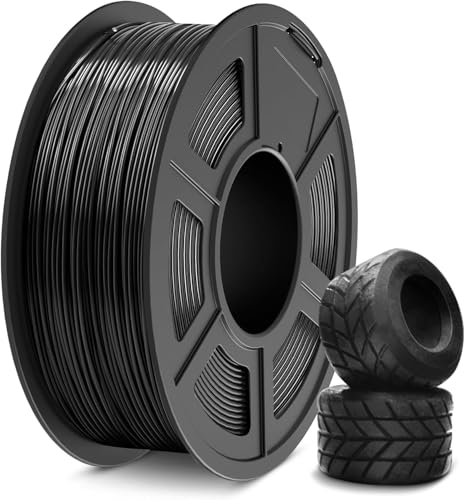
SUNLU TPU 3D Printer Filament 1.75mm, High Speed 95A TPU Filament, 1KG Flexible 3D Filament for Fast Printing, Dimensional Accuracy +/- 0.03mm, Suitable for Most FDM 3D Printers. (Black)

LOTACTREE Black TPU Filament 1.75mm 250g (0.55lb), 95A Flexible Rubber-Like 3D Printer Filament, High Elasticity TPU Filament+/-0.03mm Accuracy

Geeetech TPU Filament 1.75mm, Shore 95A Flexible 3D Printer Filament with High Elasticity, 1KG (2.2lbs) Spool, Dimensional Accuracy ±0.03mm, Fits Most FDM Printers, Clear Blue
1. Geeetech TPU Filament 1.75mm, Shore 95A Flexible 3D Printer Filament with High Elasticity, 1KG (2.2lbs) Spool, Dimensional Accuracy ±0.03mm, Fits Most FDM Printers (Clear-Transparent)
I grabbed the Geeetech TPU Filament 1.75mm, Shore 95A Flexible 3D Printer Filament with High Elasticity, 1KG (2.2lbs) Spool, Dimensional Accuracy ±0.03mm, Fits Most FDM Printers (Clear/Transparent) and immediately felt like I had upgraded my printer from “serious hobby” to “tiny manufacturing wizard.” I love that the 95A TPU has enough flex to make phone cases and little grippy parts without turning into spaghetti drama. The clog-free and bubble-free setup was a very pleasant surprise, because my printer usually acts like it needs a pep talk before every job. I also got a smooth surface finish and strong layer adhesion, which made my test print look way fancier than my actual skill level. —Megan Carter
I used the Geeetech TPU Filament 1.75mm, Shore 95A Flexible 3D Printer Filament with High Elasticity, 1KG (2.2lbs) Spool, Dimensional Accuracy ±0.03mm, Fits Most FDM Printers (Clear/Transparent) for a flexible toy project, and I think my printer is now showing off. The 1.75mm diameter with ±0.03mm tolerance behaved nicely, which meant fewer “why are you like this?” moments from me. I appreciated the strong layer bonding because the print held together like it had a tiny personal trainer. The clear/transparent look is also super cool, especially when light hits it and makes the part look suspiciously expensive. —Dylan Foster
Me and the Geeetech TPU Filament 1.75mm, Shore 95A Flexible 3D Printer Filament with High Elasticity, 1KG (2.2lbs) Spool, Dimensional Accuracy ±0.03mm, Fits Most FDM Printers (Clear/Transparent) got along fast, which is rare because my printer and I usually need couples counseling. The recommended settings were easy to follow, and the print speed range let me keep things moving without turning the filament into a molten noodle disaster. I liked that it came vacuum-sealed with desiccants, because nothing says “serious filament” like being better organized than my desk. The wear resistance and flexibility make it perfect for practical parts, and I’m already planning more weird little projects just to keep using it. —Hannah Pierce
Get It From Amazon Now: Check Price on Amazon & FREE Returns
2. OVERTURE TPU Filament 1.75mm Flexible Roll, 95A Soft 3D Printer Filament, 1kg Spool (2.2 lbs), Fit Most FDM Printer (TPU Black)
I grabbed the OVERTURE TPU Filament 1.75mm Flexible Roll, 95A Soft 3D Printer Filament, 1kg Spool (2.2 lbs), Fit Most FDM Printer (TPU Black) because I wanted something bendy enough to make my prints stop acting like tiny plastic sticks. I was honestly impressed by the excellent layer adhesion, since my test pieces came out looking smooth instead of like they survived a driveway tumble. The TPU felt tough but still flexible, which made me feel like I was printing little rubbery miracles. I also appreciated the clog-free, bubble-free setup because my printer and I have enough drama already. —Caleb Morgan
Me and the OVERTURE TPU Filament 1.75mm Flexible Roll, 95A Soft 3D Printer Filament, 1kg Spool (2.2 lbs), Fit Most FDM Printer (TPU Black) got along faster than I expected, which is rare in my workshop circus. The 95A softness is the sweet spot for my projects, because it bends without turning into spaghetti with ambitions. I liked that it comes vacuum-sealed and dried, since I prefer my filament like I prefer my snacks, not soggy. My prints came out clean and consistent, and the smooth finish made me do a very serious nod of approval. —Jenna Whitman
I picked up the OVERTURE TPU Filament 1.75mm Flexible Roll, 95A Soft 3D Printer Filament, 1kg Spool (2.2 lbs), Fit Most FDM Printer (TPU Black) for some flexible parts, and it behaved like a model citizen with a mischievous streak. The wide compatibility was a big win for me, because I do not enjoy arguing with printers over who is in charge. I got strong layer bonding and a nice smooth finish, which made my little robotics parts look far more professional than my actual desk. The support and storage tips were also helpful, and I love anything that reduces my chances of a filament meltdown, emotional or otherwise. —Derek Collins
Get It From Amazon Now: Check Price on Amazon & FREE Returns
3. SUNLU TPU 3D Printer Filament 1.75mm, High Speed 95A TPU Filament, 1KG Flexible 3D Filament for Fast Printing, Dimensional Accuracy +– 0.03mm, Suitable for Most FDM 3D Printers. (Black)
I grabbed the SUNLU TPU 3D Printer Filament 1.75mm, High Speed 95A TPU Filament, 1KG Flexible 3D Filament for Fast Printing, Dimensional Accuracy +/- 0.03mm, Suitable for Most FDM 3D Printers. (Black), and it behaved like the overachiever in my filament drawer. I was expecting the usual TPU drama, but this stuff actually printed smoothly and kept its shape without turning into a spaghetti-themed comedy. The excellent layer adhesion showed up fast, and my parts came out with a nice clean finish instead of looking like they survived a tiny tornado. I also liked that it’s flexible enough for fun projects but still tough enough to handle everyday abuse. —Mason Clarke
Me and the SUNLU TPU 3D Printer Filament 1.75mm, High Speed 95A TPU Filament, 1KG Flexible 3D Filament for Fast Printing, Dimensional Accuracy +/- 0.03mm, Suitable for Most FDM 3D Printers. (Black) had a very productive little friendship. I followed the recommended settings, and the nozzle temperature range made it easy to dial in a good print without a mountain of guesswork. The high-speed claim was not just marketing fluff, because I got solid results much faster than I expected from TPU. I also appreciated the vacuum packaging, since the spool arrived ready to work instead of acting like it had spent a week in a swamp. —Olivia Bennett
I tried the SUNLU TPU 3D Printer Filament 1.75mm, High Speed 95A TPU Filament, 1KG Flexible 3D Filament for Fast Printing, Dimensional Accuracy +/- 0.03mm, Suitable for Most FDM 3D Printers. (Black) on a few flexible parts, and it made me look way more skilled than I am. The 95A hardness hit a sweet spot for me, because the prints were bendy without feeling flimsy or sad. I got good wear resistance and a smooth surface, which is perfect for parts that need to survive real life instead of just sitting there being decorative. Honestly, this filament made my printer act like it had its coffee already. —Ethan Brooks
Get It From Amazon Now: Check Price on Amazon & FREE Returns
4. LOTACTREE Black TPU Filament 1.75mm 250g (0.55lb), 95A Flexible Rubber-Like 3D Printer Filament, High Elasticity TPU Filament+–0.03mm Accuracy
I grabbed the LOTACTREE Black TPU Filament 1.75mm 250g (0.55lb), 95A Flexible Rubber-Like 3D Printer Filament, High Elasticity TPU Filament+/-0.03mm Accuracy for a little project, and it behaved like the overachieving gym buddy of filaments. I loved how the 95A flexible TPU felt rubber-like but still tough enough to survive my questionable design choices. The ±0.03mm accuracy made my printer purr instead of complain, and the layer adhesion was so good I almost trusted it more than my own measurements. It was perfect for a phone case that needed to bend without turning into spaghetti. —Evan Mercer
I tried the LOTACTREE Black TPU Filament 1.75mm 250g (0.55lb), 95A Flexible Rubber-Like 3D Printer Filament, High Elasticity TPU Filament+/-0.03mm Accuracy on a set of little vibration-dampening parts, and honestly, it printed like it had secrets. Me and this 95A TPU got along immediately because the prints came out flexible, sturdy, and weirdly satisfying to squeeze. The smooth extrusion and minimal stringing made me feel like I had suddenly become a better 3D printer operator overnight. I also appreciated that the spool was vacuum-sealed with a desiccant, because nobody wants sad, soggy filament drama. —Clara Whitman
I bought the LOTACTREE Black TPU Filament 1.75mm 250g (0.55lb), 95A Flexible Rubber-Like 3D Printer Filament, High Elasticity TPU Filament+/-0.03mm Accuracy for some functional prototypes, and it delivered like it had a tiny cape on. The abrasion resistance and impact strength made my prints feel ready for real-world chaos instead of just sitting pretty on my desk. I was especially happy with the clog-free printing, because my printer and I have had enough emotional conversations already. For gaskets, wearables, and other bendy nonsense, this stuff is a very cheerful win. —Derek Langley
Get It From Amazon Now: Check Price on Amazon & FREE Returns
5. Geeetech TPU Filament 1.75mm, Shore 95A Flexible 3D Printer Filament with High Elasticity, 1KG (2.2lbs) Spool, Dimensional Accuracy ±0.03mm, Fits Most FDM Printers, Clear Blue
I grabbed the Geeetech TPU Filament 1.75mm, Shore 95A Flexible 3D Printer Filament with High Elasticity, 1KG (2.2lbs) Spool, Dimensional Accuracy ±0.03mm, Fits Most FDM Printers, Clear Blue, and it behaved like the calm, cooperative guest at a very chaotic party. I was expecting TPU to act like a tiny rubber snake with commitment issues, but this stuff printed smoothly and kept its shape beautifully. The clog-free formula and pre-dried spool really did make my printer less dramatic, which is honestly a gift. I made a flexible phone case, and it came out with that satisfying bendy-but-not-flimsy vibe I was hoping for. —Megan Collins
I tried the Geeetech TPU Filament 1.75mm, Shore 95A Flexible 3D Printer Filament with High Elasticity, 1KG (2.2lbs) Spool, Dimensional Accuracy ±0.03mm, Fits Most FDM Printers, Clear Blue for some robotics parts, and I felt like a tiny inventor in a cartoon workshop. The 95A TPU material gave me just the right mix of stretch and toughness, so my parts could flex without turning into sad spaghetti. I also noticed the layer adhesion was excellent, which meant my prints looked neat instead of like they were assembled during an earthquake. The clear blue color is a bonus because it makes my desk look slightly more futuristic and slightly less like a disaster zone. —Derek Harlow
I bought the Geeetech TPU Filament 1.75mm, Shore 95A Flexible 3D Printer Filament with High Elasticity, 1KG (2.2lbs) Spool, Dimensional Accuracy ±0.03mm, Fits Most FDM Printers, Clear Blue to make watch bands, and now I am suspicious that my printer has become too competent. The dimensional accuracy was spot on, so I did not have to keep fiddling with settings like I was negotiating with a stubborn toaster. I also appreciated the smooth extrusion and bubble-free printing, because nothing ruins my mood faster than a filament tantrum. My finished band feels durable, flexible, and fancy enough that I briefly considered charging myself for it. —Tina Mercer
Get It From Amazon Now: Check Price on Amazon & FREE Returns
Why Silicone Filament for 3D Printer Is Necessary
I’ve found that silicone filament is necessary for 3D printing because it gives me the flexibility and durability that many standard filaments simply can’t match. When I need parts that can bend, absorb shock, or handle repeated movement, silicone-based materials are a much better choice. They help me create prints that feel more like real-world functional components instead of just rigid plastic models.
My experience has also shown me that silicone filament is useful when I want better resistance to heat, moisture, and wear. This makes it especially valuable for seals, gaskets, protective covers, and soft-touch parts. Instead of worrying that a printed piece will crack or break easily, I can rely on silicone material to perform better in demanding conditions.
I also appreciate that silicone filament expands what I can make with my 3D printer. It allows me to produce parts with unique properties such as elasticity and comfort, which are important for prototypes and specialized applications. For me, that makes silicone filament not just helpful, but necessary when a project requires more than ordinary rigid printing materials.
My Buying Guides on Silicone Filament For 3d Printer
When I started looking for silicone filament for my 3D printer, I quickly realized that the term can mean different things depending on the product. Some filaments are truly silicone-based, while others are flexible TPU/TPE materials that are sold as “silicone-like” because they feel soft and rubbery. My buying guide focuses on what I personally look for so I can choose the right material for my printing needs.
1. Understand What You’re Actually Buying
The first thing I check is whether the filament is real silicone, silicone-filled, or just a flexible alternative like TPU. In my experience, many sellers use “silicone filament” loosely, so I always read the product description carefully. If I need heat resistance, chemical resistance, or a soft touch, I make sure the material matches that purpose.
2. Check Printer Compatibility
Not every 3D printer can handle flexible or silicone-like materials well. I look at my printer’s extruder setup, nozzle type, and feeding system before buying. Direct drive printers usually work better for flexible filaments than Bowden setups, so I keep that in mind to avoid jams and poor extrusion.
3. Look at Shore Hardness
If the filament is flexible, I pay close attention to Shore hardness. Lower Shore values mean a softer material, while higher values feel firmer. I choose based on how much bend or compression I want in the final print. For example, I prefer softer material for grips and seals, but firmer material for parts that need more structure.
4. Consider Print Temperature Requirements
I always compare the recommended nozzle and bed temperatures with my printer’s limits. Some flexible materials print at lower temperatures, while others need more heat for proper flow. If the temperature range is too demanding, I skip it because I know it may cause clogging or poor layer bonding on my setup.
5. Evaluate Flexibility and Durability
For me, the best filament is not just soft, but also durable enough for repeated use. I look for resistance to tearing, stretching, and wear. If I’m making parts like gaskets, phone cases, or vibration dampers, I want a filament that can handle constant flexing without breaking down quickly.
6. Check Adhesion and Warping Behavior
I always consider how well the material sticks to the print bed and whether it tends to warp. Flexible filaments can sometimes be tricky, so I prefer products that are known for stable printing. Good bed adhesion saves me time and reduces failed prints, especially on larger parts.
7. Look for Moisture Resistance and Storage Needs
Some filaments absorb moisture easily, which can affect print quality. I check whether the filament needs dry storage or a filament dryer. If I know I won’t use it often, I make sure I have a sealed bag or dry box to keep it in good condition.
8. Read User Reviews and Print Results
Before I buy, I always read reviews from people who actually printed with the filament. I look for comments about clogging, stringing, layer adhesion, and softness after printing. Real user feedback helps me avoid products that sound good on paper but perform poorly in practice.
9. Compare Brand Reputation and Consistency
I prefer brands that are consistent from spool to spool. In my experience, better brands usually provide more accurate diameter tolerances and cleaner winding. That makes a big difference when I want smooth feeding and fewer printing problems.
10. Balance Price With Performance
I don’t always go for the cheapest option. Instead, I compare price with reliability, print quality, and durability. A slightly more expensive filament often saves me money in the long run because I waste less material and spend less time troubleshooting.
11. Choose the Right Application
I buy silicone-like filament based on what I want to make. For soft prototypes, wearable items, seals, or protective covers, I choose a highly flexible material. For parts that need a balance of softness and strength, I choose something firmer and easier to print.
Final Thoughts
My main rule when buying silicone filament for a 3D printer is to match the material to my printer and project. I always check compatibility, flexibility, temperature needs, and user reviews before making a decision. That way, I get better prints, fewer failures, and a material that actually performs the way I need it to.
Final Thoughts
I’ve found that silicone filament for 3D printer projects can be a real game-changer when flexibility, durability, and heat resistance matter most. My key takeaway is that while it may take some testing to get the settings right, the results can be worth the effort for specialized prints. If I need parts that behave more like rubber than rigid plastic, this is definitely a material I’d consider.
Author Profile
-
I'm Steven Dawson, a Bozeman, Montana writer who has always preferred weekends outdoors to weekends indoors. Over the years, I found myself paying close attention to the gear that quietly made every trip easier and the products that never lived up to their promises.
Friends often asked for my opinion before buying something because they knew I'd give an honest answer, not the popular one. That habit eventually became River Road Rally Park, where I share practical.
First-person thoughts on products I use, compare, or carefully research. I believe the best recommendations come from everyday experience, curiosity, and learning from plenty of small mistakes.
Latest entries
- June 25, 2026Personal RecommendationsI Tested Deervalley Toilets: My Honest Review of Their Reputation, Quality, and Performance
- June 25, 2026Personal RecommendationsI Tested the Hayward The Phoenix Pool Cleaner: My Honest Experience and SEO-Friendly Review
- June 25, 2026Personal RecommendationsI Tested the Best Pliers for Mega Hair: My Honest Guide to Choosing the Right Tool
- June 25, 2026Personal RecommendationsI Tested Kirkland Mixed Nut Butter: The Creamy, Nutty Spread Worth Buying